
First Time in History: An Italian Supercomputer Reads the Unreadable Voynich Manuscript with 92% Precision
· AI-MUSE
Transcribed, not deciphered: nobody, us included, knows what it says.
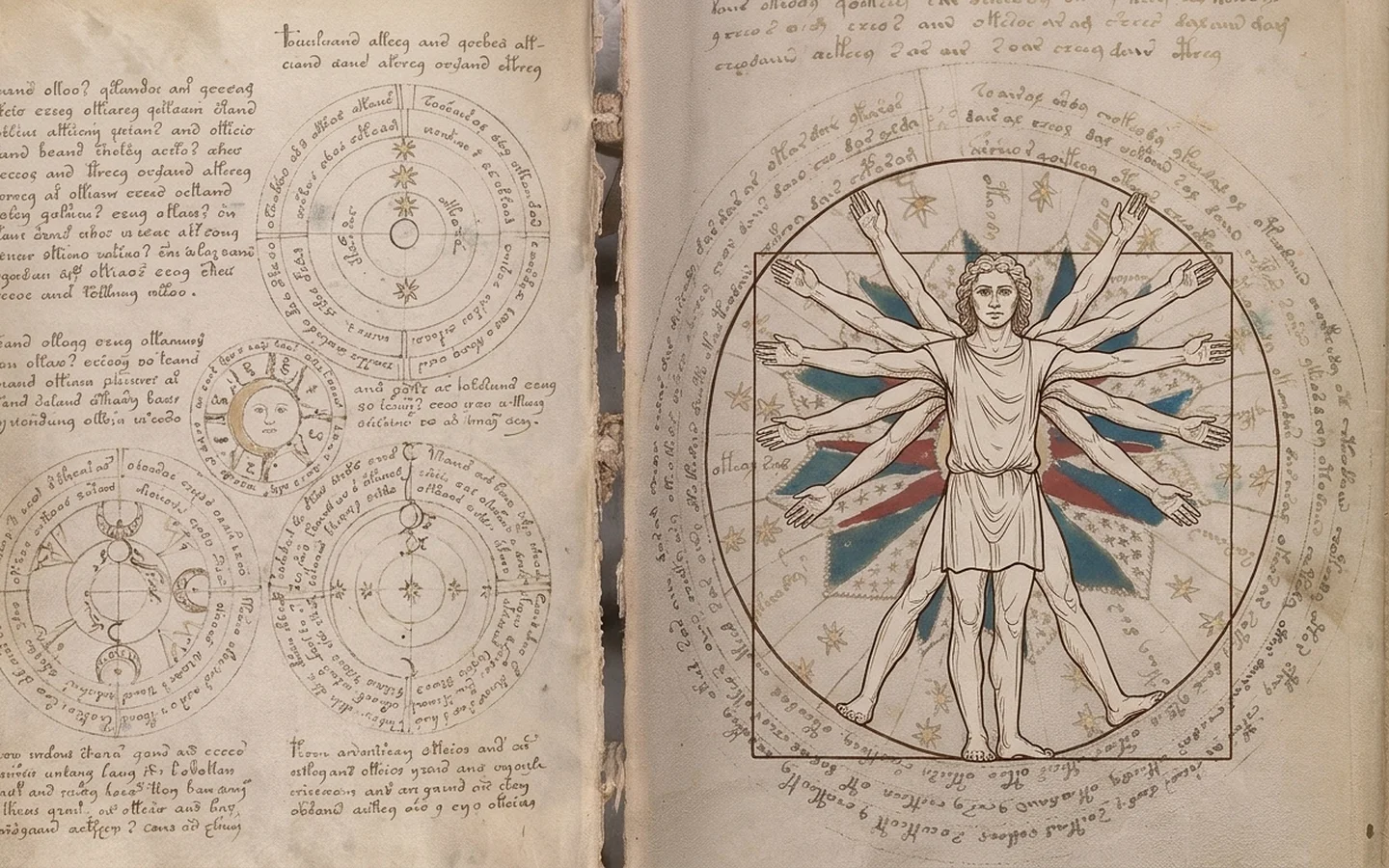
Nobody knows what the Voynich manuscript says. Its unknown script has resisted cryptographers and linguists for over a century, with every announced solution falling apart under scrutiny. When we launched our experimental document pipeline on the Leonardo supercomputer at CINECA on 11 October 2026, we did not try to decipher it. We set out to achieve something measurable and reproducible: training an AI system to read and transcribe its signs, line by line, at supercomputing scale.
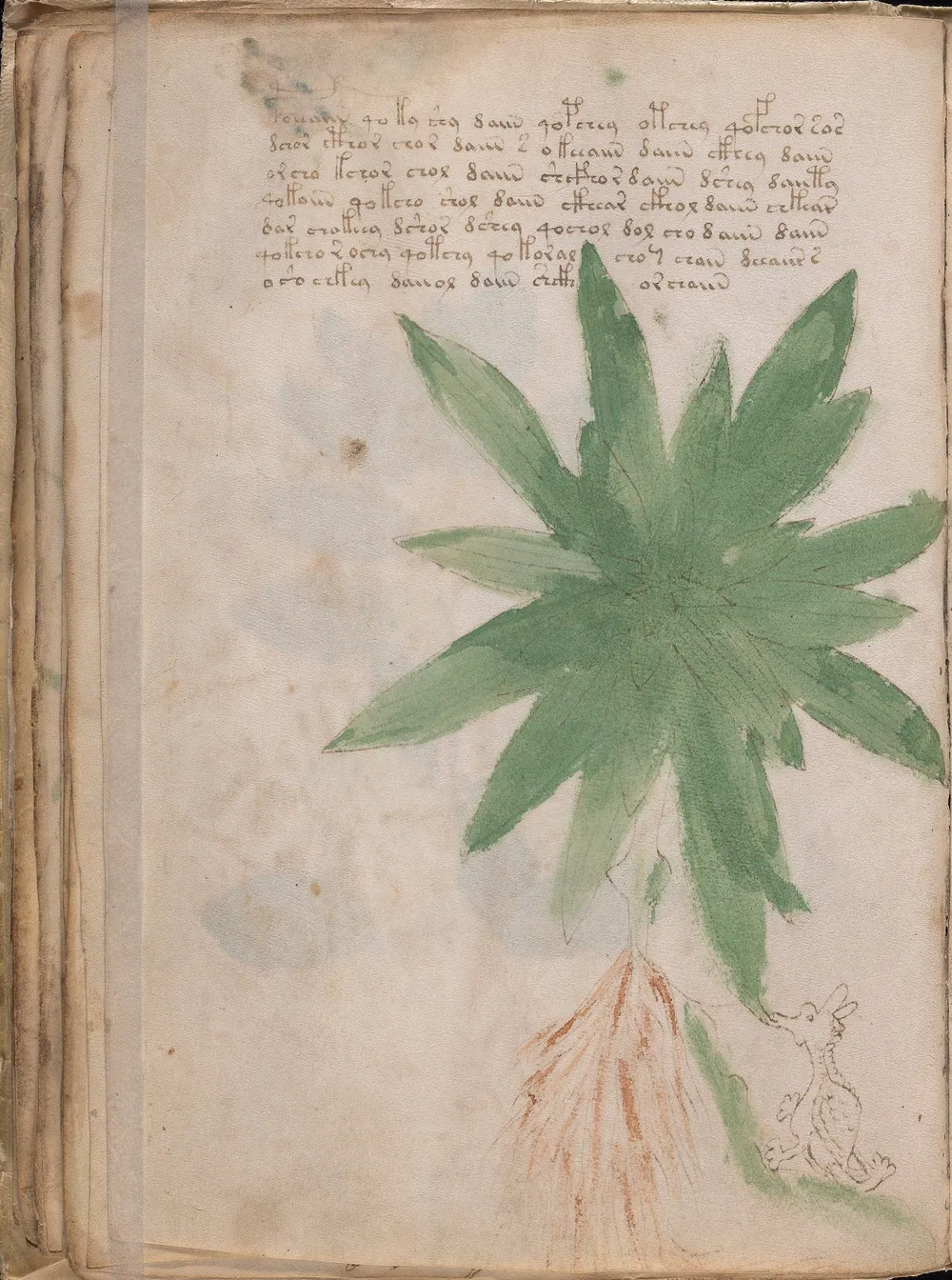
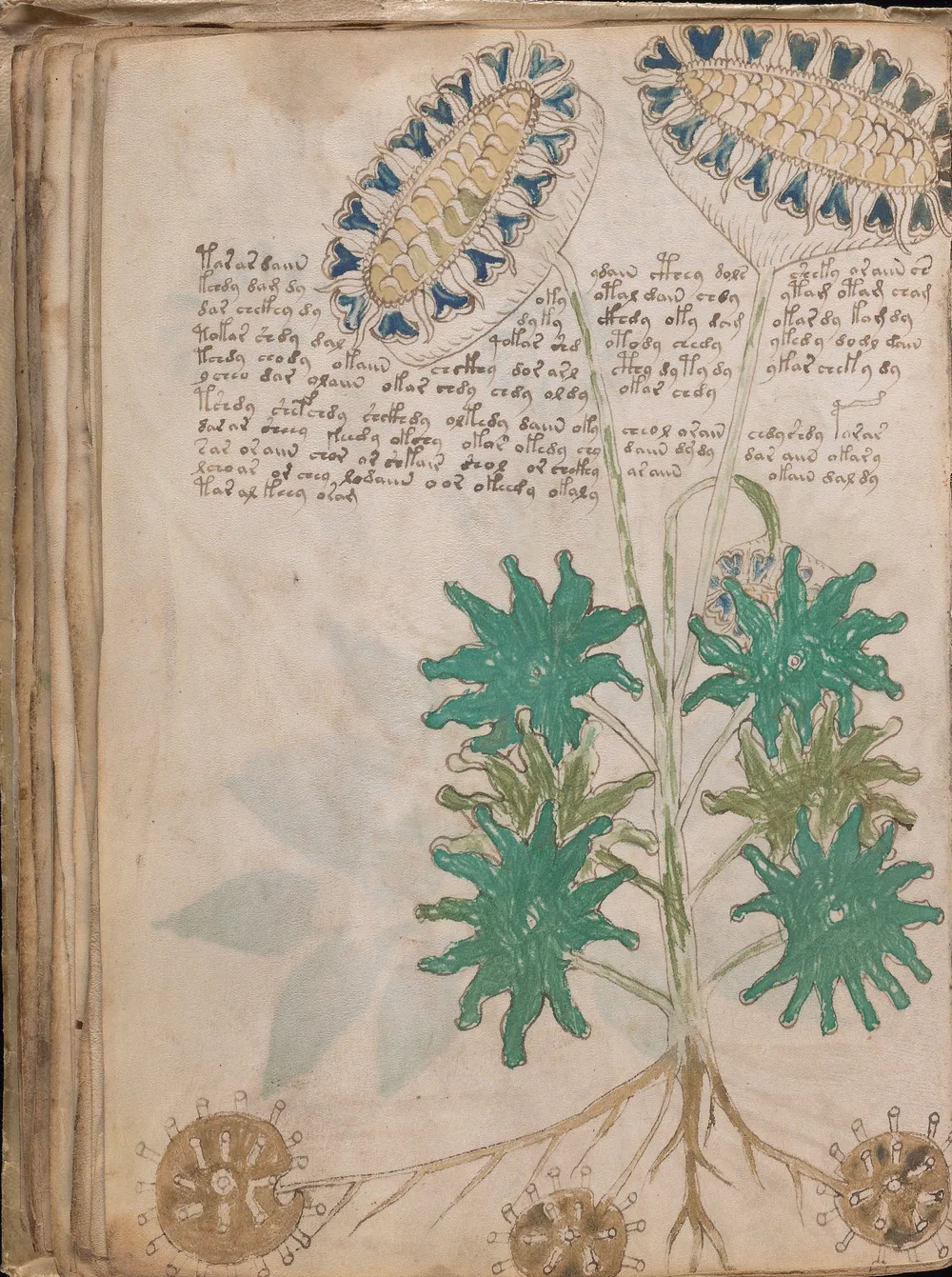
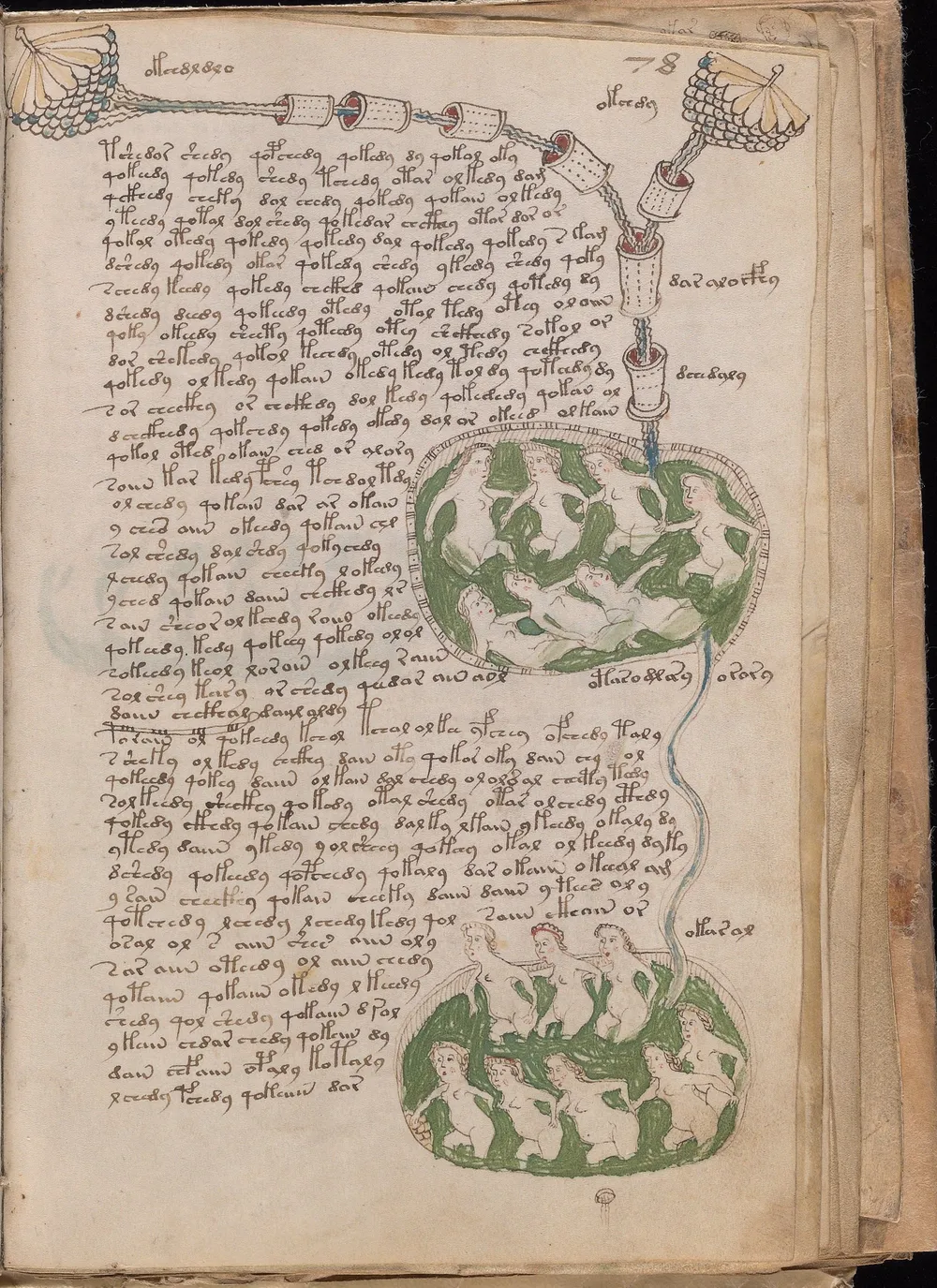
Plants that grow nowhere, a small creature at the root, figures bathing in green pools joined by tubes: folios 25v, 33v and 78r. Beinecke Rare Book and Manuscript Library, Yale University, MS 408.
The Ultimate Archival Challenge
An undeciphered script is the extreme case of the archive problem AI-MUSE addresses. General-purpose reading models rely on modern languages and predictable vocabulary; on an unknown script they have nothing to fall back on and hallucinate wildly. What a neural model needs is an anchor: transcriptions made by human scholars, from which a recogniser learns the morphology of each scribal hand. For the Voynich, scholars have built that foundation over decades. The question was whether our architecture, running on European supercomputing infrastructure, could read the rest of the manuscript, page by page, and how precisely.
The Supercomputing Pipeline
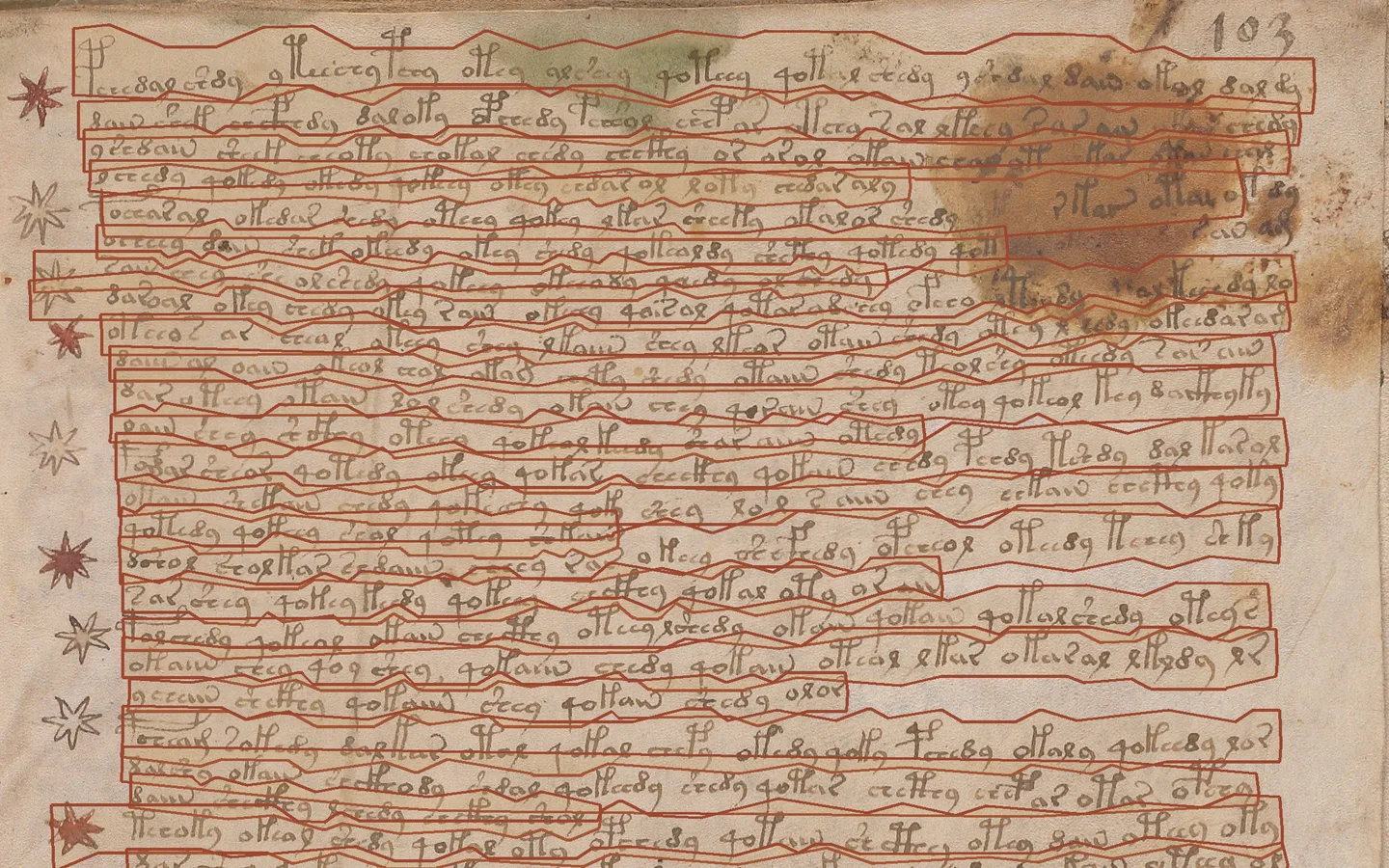
We started from two open resources: the high-resolution scans of Beinecke MS 408 published by Yale University in open access, and the authoritative ZL transcription by René Zandbergen in the EVA alphabet (IVTFF format, CC0). We used the 177 standalone pages, leaving the fold-outs for later, focusing on the lines of paragraph text.
Our pipeline segmented the lines on each page and aligned them to the human transcription. Where alignment was ambiguous, for 29 pages, we isolated those folios to evaluate them separately. Then we trained ten independent recognisers from scratch across Leonardo's NVIDIA A100 GPU cluster. Each model trained on nine tenths of the pages and read the tenth it had never seen before. Every page was transcribed blindly by a model with zero prior exposure to that sheet, taking roughly 35 minutes per model on Leonardo.
The Numbers: 91.8% Character Accuracy
- 8.2%overall character error rate on 2,651 lines across 125 completely unseen pages (falling to 7.9% without counting spaces).
- 6.1%on the scribal hand scholars call "Hand 3", mainly in the recipe section.
- 12.2%on "Hand 1" in the herbal section, where sprawling plant drawings break line geometry.
Hand 2 registered at 7.3%, while Hand 5, with only a few dozen lines to learn from, reached 16.0%. Half of all tested pages achieved an error rate under 8.3%, and twenty pages came in under 5%. Considering that human transcriptions of the Voynich in EVA differ among scholars by 3% to 5% (according to Zandbergen), our supercomputed models operate right at the theoretical ceiling of consensus.
Transcription vs. Decipherment
None of this claims that the manuscript has been decoded. A transcription turns visual signs into computable characters of an alphabet; it does not turn them into the words of a known language. Machine learning provides the speed, repeatability, and coordinate accuracy that human eyes cannot sustain across hundreds of pages. If the Voynich is ever deciphered, it will be done by people—and verified, line-matched transcriptions like this are the computational tool they need to do it.
What Comes Next
A second pass on the folios where complex layouts disrupted line alignment, human verification on a sample of alignments, labels and circular astronomical text. And finally, releasing the complete digital coordinates of every line matched to the transcription under an open licence for researchers worldwide.
Scans: Beinecke Rare Book and Manuscript Library, Yale University, MS 408. Transcription: ZL 3b, René Zandbergen, CC0. Recognisers: Kraken 7.1.1. AI-MUSE has been granted compute resources through the IT4LIA AI Factory (EuroHPC), project EHPC-AIF-2026PG01-1068. Processing runs on Leonardo Booster at CINECA, Bologna. We acknowledge EuroHPC JU for awarding the project ID EHPC-AIF-2026PG01-1068 access to 5,000 GPU hours on Leonardo Booster hosted by CINECA, Italy.